


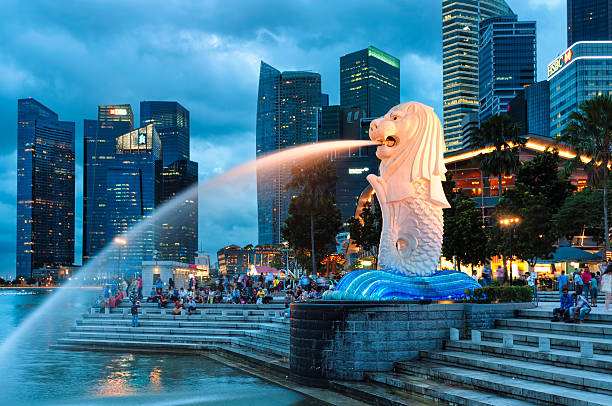
Why Singapore for Indian Students?
Singapore stands as one of Asia’s most dynamic and globally connected economies, making it a premier destination for Indian students seeking world-class education and career opportunities. With its multicultural environment, strong Indian diaspora, use of English as an official language, and robust job market, Singapore offers Indian students a unique advantage in building their international careers.
The city-state consistently ranks among the top global destinations for education and quality of life. Its strategic location in Southeast Asia, coupled with a thriving financial sector, technology ecosystem, healthcare industry, and government support for skilled professionals, makes it an ideal launchpad for ambitious students from India.
PART I: After Grade 12 — Undergraduate Pathways in Singapore
1.1 Overview of the Singapore Education System
The Singapore higher education landscape is structured, merit-based, and internationally recognised. Indian students completing Grade 12 (equivalent to the Indian Standard XII / HSC / ISC / CBSE boards) can pursue undergraduate degrees at public or private institutions in Singapore.
Admission is generally based on academic performance in Grade 12 examinations, English proficiency scores (IELTS/TOEFL), and sometimes entrance tests or interviews. Indian students with strong results in their board examinations are eligible to apply directly to Singapore universities.
1.2 Public Universities in Singapore — Undergraduate Programs
Singapore has six autonomous public universities, each with a distinct focus. These universities are globally ranked and offer internationally accredited degrees.
| University | Known For | Est. UG Tuition (SGD/year) |
| National University of Singapore (NUS) | Law, Medicine, Engineering, Business | ~17,550 – 37,550 |
| Nanyang Technological University (NTU) | Engineering, Science, Business, Arts | ~17,550 – 37,550 |
| Singapore Management University (SMU) | Business, Law, Computing, Social Sciences | ~18,000 – 30,000 |
| Singapore University of Technology & Design (SUTD) | Design, Engineering, Architecture | ~18,000 – 28,000 |
| Singapore Institute of Technology (SIT) | Applied Engineering, Nursing, Hospitality | ~12,000 – 20,000 |
| Singapore University of Social Sciences (SUSS) | Social Work, Psychology, Business | ~10,000 – 18,000 |
Key Programs After Grade 12
- Bachelor of Engineering (B.Eng.) – Civil, Electrical, Computer, Mechanical
- Bachelor of Business Administration (BBA) / Bachelor of Accountancy
- Bachelor of Computing / B.Sc. in Computer Science / Data Science & AI
- Bachelor of Science (Life Sciences, Chemistry, Physics, Mathematics)
- Bachelor of Laws (LLB) – subject to eligibility
- Bachelor of Architecture / Bachelor of Industrial Design
- Bachelor of Nursing / Bachelor of Physiotherapy
- Bachelor of Social Sciences / Psychology / Communications
1.3 Admission Requirements for Indian Students (Public Universities)
- Completion of Grade 12 / HSC / CBSE / ISC with strong grades (typically 75%+ or equivalent)
- English language proficiency: IELTS 6.0–7.0 or TOEFL iBT 85–100
- SAT or subject-specific entrance tests may be required for select programs
- Personal statement, co-curricular achievements, and letters of recommendation
- Submission of Class X and Class XII mark sheets and certificates
- A-Level or International Baccalaureate (IB) credentials may provide additional advantage
1.4 Private Universities and Institutions in Singapore
Singapore also hosts a robust private higher education sector regulated by the Committee for Private Education (CPE). Many private institutions offer local degree programs as well as twinning arrangements with reputed international universities from the UK, Australia, and USA.
| Institution | Programs Offered | Typical Fees (SGD/year) |
| PSB Academy | Business, IT, Engineering, Hospitality | ~8,000 – 15,000 |
| Kaplan Singapore | Business, Mass Comm., Psychology, IT | ~8,000 – 14,000 |
| MDIS (Management Dev. Institute) | Business, Fashion, Engineering, Nursing | ~9,000 – 16,000 |
| James Cook University Singapore | Psychology, Business, IT, Tropical Science | ~16,000 – 22,000 |
| Curtin Singapore | Business, Engineering, Mass Comm. | ~14,000 – 20,000 |
| S P Jain School of Global Management | BBA, Global Business Management | ~28,000 – 35,000 |
| Singapore Institute of Management (SIM) | Business, IT, Psychology (with UK/Aus partners) | ~9,000 – 16,000 |
| Raffles College of Higher Education | Design, Business, Fashion, Media | ~15,000 – 25,000 |
1.5 Career Opportunities After Undergraduate Study in Singapore
Singapore’s economy is driven by finance, technology, healthcare, logistics, and professional services. Indian students with Singapore degrees are highly employable both locally and globally.
Technology & Computing
- Software Developer / Engineer — Average salary: SGD 4,500–7,000/month
- Data Analyst / Data Scientist — SGD 4,000–8,000/month
- Cybersecurity Analyst / Cloud Engineer — SGD 4,500–8,500/month
- AI/Machine Learning Engineer — SGD 5,500–10,000/month
Business & Finance
- Financial Analyst / Investment Banking Associate — SGD 4,500–9,000/month
- Accountant / Audit Associate (Big 4 firms) — SGD 3,500–5,500/month
- Supply Chain & Logistics Manager — SGD 3,800–6,500/month
- Marketing & Digital Communications Executive — SGD 3,500–5,500/month
Engineering & Design
- Civil / Structural Engineer — SGD 3,500–6,000/month
- Electrical / Electronics Engineer — SGD 4,000–7,000/month
- Product Designer / UX/UI Designer — SGD 3,800–6,500/month
Healthcare & Life Sciences
- Registered Nurse — SGD 3,000–5,000/month
- Biomedical Researcher / Lab Analyst — SGD 3,500–5,500/month
- Pharmaceutical / Biotech Executive — SGD 4,500–8,000/month
1.6 Work Pass & Employment Prospects for International Graduates
Upon completing an undergraduate degree in Singapore, international students (including Indians) can apply for the Graduate’s Pass, which allows them to stay and seek employment for up to one year. Those who secure employment are eligible for an Employment Pass (EP) or S Pass depending on their salary level and employer. Singapore actively encourages skilled graduates from top local universities to remain in the workforce.
PART II: Master’s Degree Pathways in Singapore for Indian Students
2.1 Why Pursue a Master’s Degree in Singapore?
Singapore’s graduate programs are internationally acclaimed and designed with strong industry linkages, research opportunities, and global faculty. For Indian professionals and fresh graduates, a Master’s degree from Singapore offers accelerated career growth, a globally portable qualification, and a gateway into the ASEAN job market.
The typical duration for a Master’s program in Singapore is 1 to 2 years. Indian students with a Bachelor’s degree (minimum 3–4 years) from a recognised university are eligible to apply. Many programs also welcome working professionals with relevant work experience.
2.2 Public Universities — Master’s Programs
National University of Singapore (NUS)
- Master of Science in Computer Science / Artificial Intelligence / Data Science
- Master of Business Administration (MBA) / Executive MBA
- Master of Engineering / Master of Technology (various specializations)
- Master of Public Policy / Master of Social Sciences
- Master of Laws (LLM) / Master of Medicine (MMed)
- Tuition Fees: SGD 16,000 – 55,000 (program-dependent)
Nanyang Technological University (NTU)
- MSc in Data Science / Financial Technology / Artificial Intelligence
- MBA / Nanyang Executive MBA
- Master of Science in Environmental Engineering / Biomedical Engineering
- MSc in Communication Studies / Asian Studies
- Tuition Fees: SGD 16,000 – 50,000
Singapore Management University (SMU)
- Master of IT in Business (MITB) — Analytics & AI Track
- Master of Science in Accounting / Finance / Wealth Management
- Juris Doctor (JD) / Master of Laws (LLM)
- SMU-X MBA — with industry immersion
- Tuition Fees: SGD 18,000 – 55,000
Singapore University of Technology & Design (SUTD)
- Master of Architecture / Master of Engineering Product Development
- Master of Science in Innovation by Design
- Tuition Fees: SGD 15,000 – 30,000
Singapore Institute of Technology (SIT)
- Master of Science in Precision Medicine and Data Analytics
- Master of Engineering in Systems Engineering and Design
- Tuition Fees: SGD 12,000 – 22,000
| Field | Top Program | University | Typical Fee (SGD) |
| Technology & AI | MSc Computer Science | NUS / NTU | 20,000 – 32,000 |
| FinTech & Finance | MSc Financial Technology | NTU / SMU | 25,000 – 40,000 |
| Data Science | MSc Data Science | NUS / NTU | 19,000 – 32,000 |
| Business (MBA) | Full-Time MBA | NUS / NTU / SMU | 40,000 – 55,000 |
| Engineering | MEng (various) | NUS / NTU / SUTD | 16,000 – 28,000 |
| Public Policy | Master of Public Policy | NUS Lee Kuan Yew School | 32,000 – 45,000 |
| Law | Master of Laws (LLM) | NUS / SMU | 25,000 – 42,000 |
| Healthcare Mgmt. | MSc Health Management | NUS Saw Swee Hock | 24,000 – 36,000 |
2.3 Private Universities — Master’s Programs
Private universities and international branch campuses in Singapore also offer recognised Master’s programs at relatively lower costs, making them accessible for a wider range of Indian students.
| Institution | Master’s Programs | Fees (SGD/year) |
| S P Jain School of Global Management | Global MBA, Master in Global Management | 35,000 – 42,000 |
| James Cook University Singapore | MBA, MSc IT, MSc Psychology | 16,000 – 22,000 |
| Curtin Singapore | MBA, MSc in courses like Engineering | 14,000 – 20,000 |
| MDIS (with partner universities) | MBA, MSc Business / IT (UK-affiliated) | 10,000 – 18,000 |
| Kaplan Singapore (Northumbria Univ.) | MBA, MSc Finance, MSc IT | 10,000 – 16,000 |
| SIM (with UK/Aus partner universities) | MBA, MSc Business Analytics | 12,000 – 18,000 |
| INSEAD (one-year MBA — Fontainebleau/Singapore) | MBA (world-renowned) | ~90,000 (full program) |
2.4 Admission Requirements for Indian Students (Master’s Level)
- Bachelor’s degree in a relevant discipline from a recognised university
- Minimum CGPA of 3.0/4.0 or equivalent (60–75% marks depending on the institution)
- English proficiency: IELTS 6.5–7.5 or TOEFL iBT 90–110
- GMAT / GRE scores required for MBA and some MSc programs (typically GMAT 600–680+)
- Statement of Purpose (SOP) and Letters of Recommendation (typically 2–3)
- Updated CV/resume highlighting academic and professional achievements
- Work experience (typically 2–5 years required for MBA programs, optional for most MSc)
- Research proposal (required for research-based Master’s and PhD programs)
2.5 Career Opportunities After Master’s Degree in Singapore
A Master’s degree from Singapore dramatically enhances employability, salary prospects, and career trajectory. The following sectors are the highest-demand areas for Master’s graduates.
Technology & Artificial Intelligence
- AI Engineer / Machine Learning Specialist — SGD 6,000–12,000/month
- Data Scientist / Business Intelligence Analyst — SGD 6,500–11,000/month
- Cloud Solutions Architect / DevOps Engineer — SGD 6,000–11,000/month
- Cybersecurity Manager / Chief Information Security Officer (CISO) — SGD 8,000–18,000/month
Finance & FinTech
- Investment Banker / Portfolio Manager — SGD 7,000–20,000/month
- FinTech Product Manager / Digital Banking Lead — SGD 7,500–15,000/month
- Risk Manager / Quantitative Analyst (Quant) — SGD 7,000–14,000/month
- Wealth Manager / Private Banker — SGD 6,500–15,000+/month
Management & Business
- Management Consultant (McKinsey, BCG, Bain, Deloitte) — SGD 7,000–14,000/month
- Operations Director / Supply Chain Head — SGD 7,000–15,000/month
- Product Manager (Tech firms) — SGD 7,500–14,000/month
- Marketing Director / Brand Strategist — SGD 6,000–12,000/month
Engineering & Innovation
- Robotics / Mechatronics Engineer — SGD 5,500–10,000/month
- Environmental / Sustainability Consultant — SGD 5,000–9,000/month
- Aerospace / Defence Engineer — SGD 6,000–11,000/month
Healthcare & Life Sciences
- Hospital Administrator / Healthcare Policy Analyst — SGD 6,000–10,000/month
- Clinical Researcher / Biotech Product Manager — SGD 6,000–11,000/month
- Pharmaceutical Strategy Manager — SGD 6,500–12,000/month
PART III: Scholarships & Financial Aid for Indian Students
3.1 Government & University Scholarships
- ASEAN Undergraduate Scholarship (NUS, NTU, SMU) — For ASEAN nationals including Indians with outstanding results
- NUS Research Scholarship / NTU Research Scholarship — Covers tuition + monthly stipend for research-track students
- Singapore International Graduate Award (SINGA) — Full scholarship for PhD students with research focus
- SMU-School of Accountancy Scholarship / SMU-SIS Scholarship — Merit-based awards for specific programs
- SIT Scholarship — For outstanding students in applied degree programs
3.2 Indian Government & Bilateral Support
- Study in India / ICCR Scholarships — Supports Indian students pursuing overseas education
- State Bank of India (SBI) Education Loan — Up to INR 1.5 crore for overseas education
- HDFC Credila / Avanse Education Loans — Flexible loan products for study in Singapore
- Vidya Lakshmi Portal — Centralized platform for applying to multiple government education loans
PART IV: Practical Tips for Indian Students Planning to Study in Singapore
4.1 Before You Apply
- Research programs thoroughly — align your choice of degree with your career goals and industry interest
- Prepare for English proficiency tests (IELTS/TOEFL) at least 6 months in advance
- For MBA programs, prepare for GMAT and begin studying 4–6 months ahead
- Build a strong Statement of Purpose that highlights your academic journey, goals, and Singapore’s specific relevance to your career
- Reach out to alumni from Indian universities who have studied in Singapore — platforms like LinkedIn are valuable for this
4.2 Visa & Entry Requirements
- Indian students require a Student’s Pass (STP) issued by the Immigration & Checkpoints Authority (ICA) of Singapore
- Applications are typically submitted via the SOLAR system online before arriving in Singapore
- A valid Letter of Acceptance from a registered institution, financial proof, and medical examination may be required
- Student’s Pass is usually granted for the duration of the course
4.3 Living in Singapore as an Indian Student
- Monthly living expenses typically range from SGD 1,200–2,000 including housing, food, transport, and personal expenses
- On-campus hostels and student dormitories are available at public universities — recommended for first-year students
- Singapore has a vibrant Indian community; Little India in Tekka, Serangoon Road, and Mustafa Centre offer familiar food and cultural comforts
- Part-time work is permitted for students enrolled in recognised institutions — up to 16 hours per week during academic terms
- Singapore’s public transport (MRT and buses) is efficient, affordable, and easily navigable
4.4 Post-Study Work Opportunities
- NUS/NTU/SMU graduates with relevant degrees and salary ≥ SGD 5,000/month can apply for an Employment Pass (EP)
- The Personalised Employment Pass (PEP) is available for high-earners with a minimum fixed salary of SGD 22,500/month
- Singapore’s ONE Pass (Overseas Networks & Expertise Pass) targets exceptional talent in business, arts, academia, and sports
- Permanent Residency (PR) can be applied for after 2–6 years of working in Singapore under a valid EP/S-Pass
Conclusion
Singapore stands at the intersection of Eastern and Western worlds — a place where academic excellence meets career opportunity. For Indian students, whether pursuing an undergraduate degree after Grade 12 or a Master’s degree after completing their bachelor’s, Singapore offers an unmatched combination of globally ranked institutions, English-medium education, a multicultural environment, and a thriving job market that spans technology, finance, healthcare, and beyond.
Public universities like NUS, NTU, and SMU represent the gold standard in Singapore higher education, while private institutions and international branch campuses provide more accessible and flexible pathways. Whether your budget is modest or ample, Singapore’s higher education system has options to suit a variety of profiles and aspirations.
The key is early planning — researching programs, preparing application materials meticulously, and leveraging Singapore’s extensive scholarship ecosystem. With the right preparation and ambition, Singapore can become the springboard for a truly global career.
At Sky Dream International, we help students select the best-fit universities.
Call: 91-7039291910 | Email: jay@skydream.co.in | www.skydream.co.in