


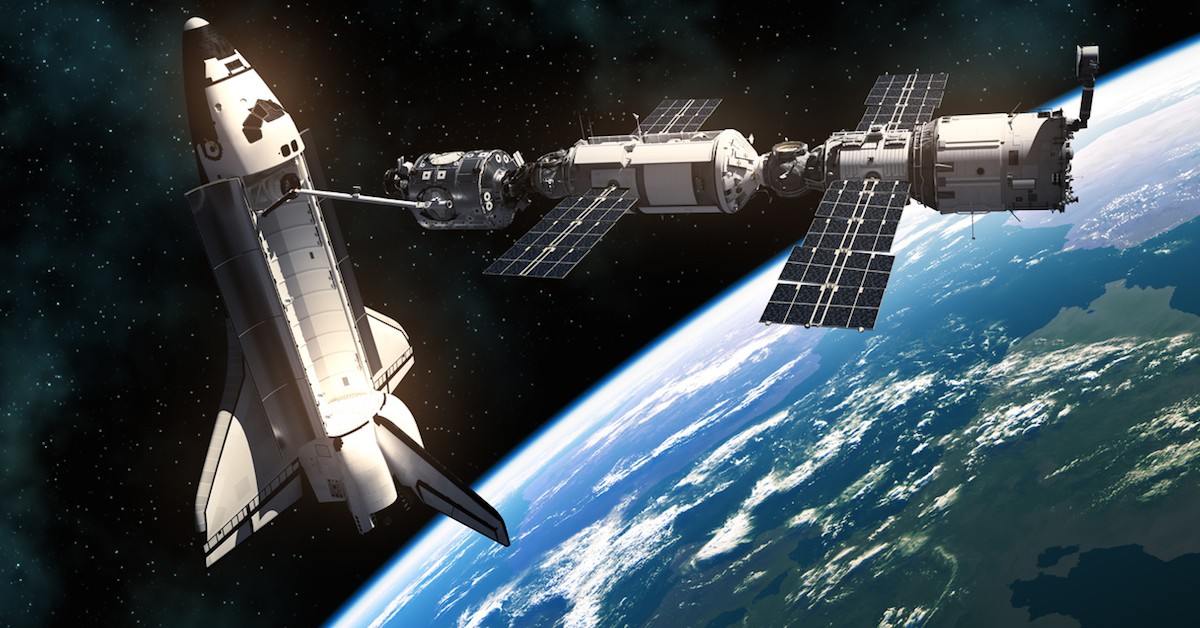
The space industry is experiencing unprecedented growth, with global space economy revenues projected to reach over $600 billion in recent years. From reusable rockets to Mars missions, satellite constellations to space tourism, the opportunities for aspiring space engineers have never been more exciting. If you’re a Grade 12 student dreaming of contributing to humanity’s journey beyond Earth, here’s your comprehensive guide to launching a career in space engineering.
What is Space Engineering?
Space engineering, also known as aerospace engineering or astronautical engineering, involves the design, development, testing, and production of spacecraft, satellites, space stations, and related systems. Space engineers work on everything from propulsion systems and orbital mechanics to life support systems and planetary rovers.
Career Paths in Space Engineering
The field offers diverse specializations:
Spacecraft Design Engineer – Design and develop vehicles for space missions, from satellites to interplanetary probes.
Propulsion Engineer – Work on rocket engines, ion drives, and next-generation propulsion systems.
Systems Engineer – Integrate complex subsystems to ensure spacecraft function as cohesive units.
Mission Operations Specialist – Control and monitor spacecraft during missions from ground stations.
Satellite Engineer – Design and maintain communication, navigation, and Earth observation satellites.
Avionics Engineer – Develop electronic systems for guidance, navigation, and control.
Thermal Engineer – Ensure spacecraft can withstand extreme temperature variations in space.
Orbital Mechanics Specialist – Calculate trajectories, orbits, and gravitational assists for space missions.
Academic Pathway
To become a space engineer, you’ll typically need to pursue a Bachelor’s degree in Aerospace Engineering, Mechanical Engineering, Electrical Engineering, or Physics. Many space engineers continue to Master’s or PhD programs for advanced research and specialized roles.
Essential subjects in Grade 12 include Physics, Mathematics (especially Calculus), Chemistry, and Computer Science. Strong analytical skills, problem-solving abilities, and a passion for innovation are crucial.
Top Countries for Space Engineering Education
- United States
The US remains the global leader in space engineering education and industry.
Top Universities:
- Massachusetts Institute of Technology (MIT)
- California Institute of Technology (Caltech)
- Stanford University
- University of Michigan
- Georgia Institute of Technology
- Purdue University
- University of Colorado Boulder
Entry Requirements:
- Strong GPA (typically 3.5+/4.0)
- SAT (1400-1550) or ACT (32-35) scores
- TOEFL (90-100+) or IELTS (7.0-7.5) for international students
- Strong Physics and Mathematics grades
- Extracurricular activities, research projects, or competitions in STEM
- Letters of recommendation and compelling personal essays
Why Study Here: NASA, SpaceX, Blue Origin, and hundreds of aerospace companies offer unparalleled internship and career opportunities. The US space industry is the largest globally.
- United Kingdom
The UK has a thriving space sector and world-class universities.
Top Universities:
- Imperial College London
- University of Cambridge
- University of Oxford (Engineering Science)
- University of Southampton
- Cranfield University (postgraduate programs)
- University of Surrey
- University of Bristol
Entry Requirements:
- A-Level grades: A*AA to AAA (including Mathematics and Physics)
- International Baccalaureate: 38-40 points with Higher Level Mathematics and Physics
- IELTS 6.5-7.0 (minimum 6.0 in each component)
- UCAS application with strong personal statement
- Some universities may require admissions tests (ENGAA, PAT)
Why Study Here: Strong connections with the UK Space Agency, European Space Agency, and companies like Airbus Defence and Space. Three-year undergraduate degrees offer cost efficiency.
- Germany
Germany offers excellent engineering education, often with low or no tuition fees at public universities.
Top Universities:
- Technical University of Munich (TUM)
- RWTH Aachen University
- University of Stuttgart
- Technical University of Berlin
- University of Bremen
Entry Requirements:
- Recognized Grade 12 certificate (may require one year of university study in home country or Studienkolleg)
- Strong grades in Mathematics and Physics
- German language proficiency (TestDaF 4×4 or DSH-2) for German-taught programs, or IELTS 6.5-7.0 for English-taught programs
- Some programs may require entrance examinations
Why Study Here: Minimal tuition fees, strong industry partnerships with Airbus, OHB SE, and ESA facilities. Germany’s engineering tradition is world-renowned.
- France
France has a distinguished space program and prestigious engineering schools.
Top Institutions:
- ISAE-SUPAERO (Institut Supérieur de l’Aéronautique et de l’Espace)
- École Polytechnique
- ENAC (École Nationale de l’Aviation Civile)
- Université Pierre et Marie Curie
- ESTACA (École Supérieure des Techniques Aéronautiques et de Construction Automobile)
Entry Requirements:
- Strong Mathematics and Physics background
- French Baccalauréat or equivalent with excellent grades
- Competitive entrance examinations for Grandes Écoles
- French language proficiency (DELF B2/C1) for French-taught programs
- IELTS 6.5+ for English-taught programs
Why Study Here: Home to CNES (French Space Agency), Airbus headquarters, and Ariane Group. Strong focus on practical engineering education.
- Canada
Canada’s space sector is growing rapidly with significant government investment.
Top Universities:
- University of Toronto
- McGill University
- Carleton University (specialization in Aerospace Engineering)
- Ryerson University
- University of British Columbia
- Concordia University
Entry Requirements:
- Strong Grade 12 grades (typically 80-95% depending on university)
- Advanced Mathematics and Physics courses
- IELTS 6.5-7.0 or TOEFL 90-100
- SAT or ACT may strengthen applications but often not required
- Supplementary essays or video interviews for some programs
Why Study Here: Canadian Space Agency, MDA Corporation, and growing private space sector. Post-graduation work permits available for international students.
- Australia
Australia has emerging space capabilities with the recent establishment of the Australian Space Agency.
Top Universities:
- University of Sydney
- University of New South Wales (UNSW)
- RMIT University
- University of Adelaide
- Swinburne University
Entry Requirements:
- ATAR score of 85-98 (or equivalent international qualifications)
- Strong Mathematics and Physics results
- IELTS 6.5 (no band below 6.0) or equivalent
- Some universities accept Indian Grade 12 with 75-85% in relevant subjects
Why Study Here: Growing space industry, research opportunities, and post-study work visa options. Strong focus on satellite technology and space situational awareness.
- Japan
Japan’s space program (JAXA) is highly advanced with unique specializations.
Top Universities:
- University of Tokyo
- Kyoto University
- Tohoku University
- Tokyo Institute of Technology
- Nagoya University
Entry Requirements:
- Completion of 12 years of education
- Entrance examinations (EJU – Examination for Japanese University Admission)
- Japanese language proficiency (JLPT N2-N1) or English proficiency for English-taught programs
- Strong Mathematics and Science background
Why Study Here: Cutting-edge research in robotics, satellite technology, and planetary exploration. Collaboration opportunities with JAXA.
Financial Considerations
Scholarships and Funding:
- Fulbright Program (USA)
- Chevening Scholarships (UK)
- DAAD Scholarships (Germany)
- Eiffel Excellence Scholarship (France)
- Government of Canada Scholarships
- University-specific scholarships for international students
Annual costs vary significantly: Germany offers public universities with minimal fees (€300-500 per semester), while US and UK programs can range from $30,000-70,000 per year including living expenses.
Building Your Profile
To strengthen your application:
- Excel in Physics, Mathematics, and Computer Science
- Participate in science olympiads, robotics competitions, or astronomy clubs
- Complete online courses in programming (Python, MATLAB) and CAD software
- Pursue internships or projects related to engineering
- Engage with space-related organizations or attend workshops
- Develop strong communication and teamwork skills
Industry Outlook
The space industry is booming. Private companies like SpaceX, Blue Origin, Rocket Lab, and Virgin Galactic are revolutionizing access to space. Traditional aerospace giants like Boeing, Airbus, Lockheed Martin, and Northrop Grumman continue to innovate. Emerging sectors include satellite internet constellations, space tourism, asteroid mining, and lunar exploration.
Career prospects are excellent, with competitive salaries ranging from $70,000-120,000+ for entry-level positions, depending on location and specialization. Senior space engineers and specialists can earn significantly more.
Final Thoughts
A career in space engineering offers the opportunity to work on humanity’s most ambitious endeavors. Whether you’re designing the next Mars rover, developing satellite systems that connect the world, or creating propulsion systems for interstellar exploration, your work will push the boundaries of human achievement.
The journey requires dedication, strong technical skills, and perseverance, but for those passionate about exploration and innovation, few careers are as rewarding. The cosmos is waiting—your journey begins now.
At Sky Dream International, we help students select the best-fit universities.
Call: 91-7039291910 | Email: jay@skydream.co.in | www.skydream.co.in